Draft assistance
AI can help extract invoice text and suggest a match. A person reviews the vendor item, pack, unit, and restaurant meaning before the value is used downstream.
Trust
Dynamic.ly keeps the original record, calculation, estimate, manager decision, and current state in view.
Dynamic.ly recommends · the manager decides · external execution is disabled
What the number must answer
Ask where the cost came from, how it was calculated, what remains estimated, and who made the decision.
Each question points to a source, review, or decision record.
The evidence line
01 / Source
Original record
Attached or unavailable
02 / Calculation
Reviewed values and rules
Calculated
03 / Estimate
Projected consequence
Estimated
04 / Decision
Named manager
Decision recorded
05 / History
Decision history
Measured outcome separate
The line runs one way. A source record can support an estimate; approval cannot turn that estimate into a measured outcome.
Proof 01 · source and review
A proposed invoice match remains a draft until a person confirms it. The original page and extracted value remain visible together.
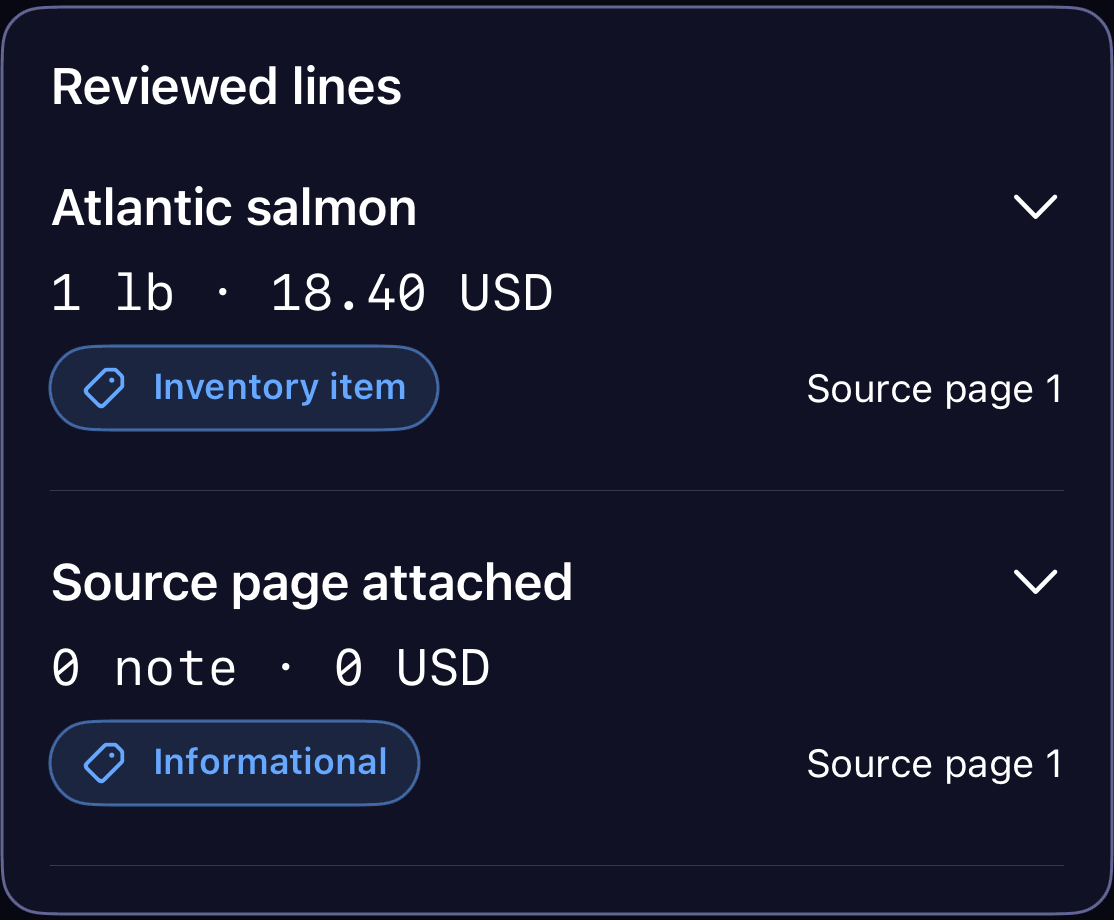
AI can help extract invoice text and suggest a match. A person reviews the vendor item, pack, unit, and restaurant meaning before the value is used downstream.
Reviewed values and the restaurant’s configured rules determine the calculation. Missing records stay visible; a confidence score cannot stand in for review.
These are selected private product views. Available sources and review actions depend on the approved environment and pilot setup.
Proof 02 · recommendation and limits
The reason, source records, evidence state, floor, window, cap, and projected impact remain inspectable on the Action Card.
Approve, edit, reject, or ignore · A recorded choice does not execute a change
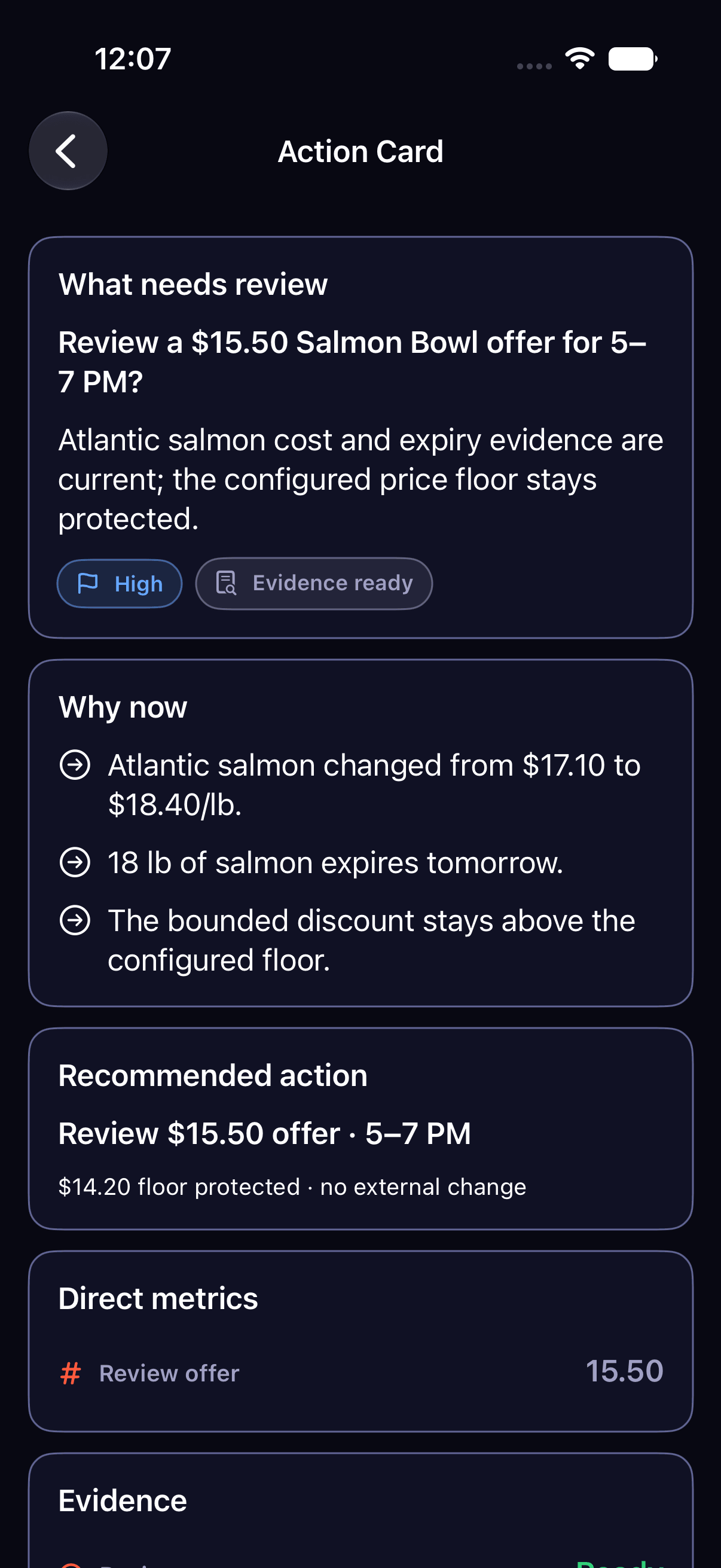
Proof 03 · authority and history
Dynamic.ly records who decided, when, and under which limits. The record does not prove an external change or a measured outcome.
From · decision
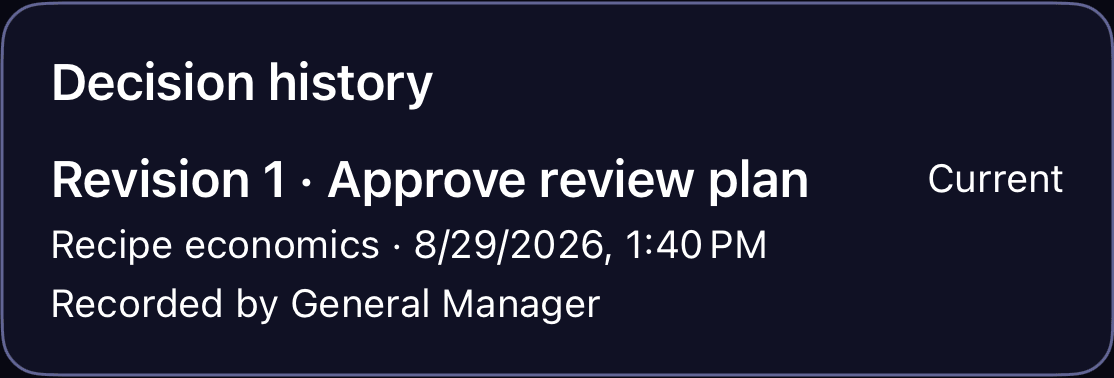
Decision → history
The same action, one step later: what was chosen becomes what is on file.
To · history
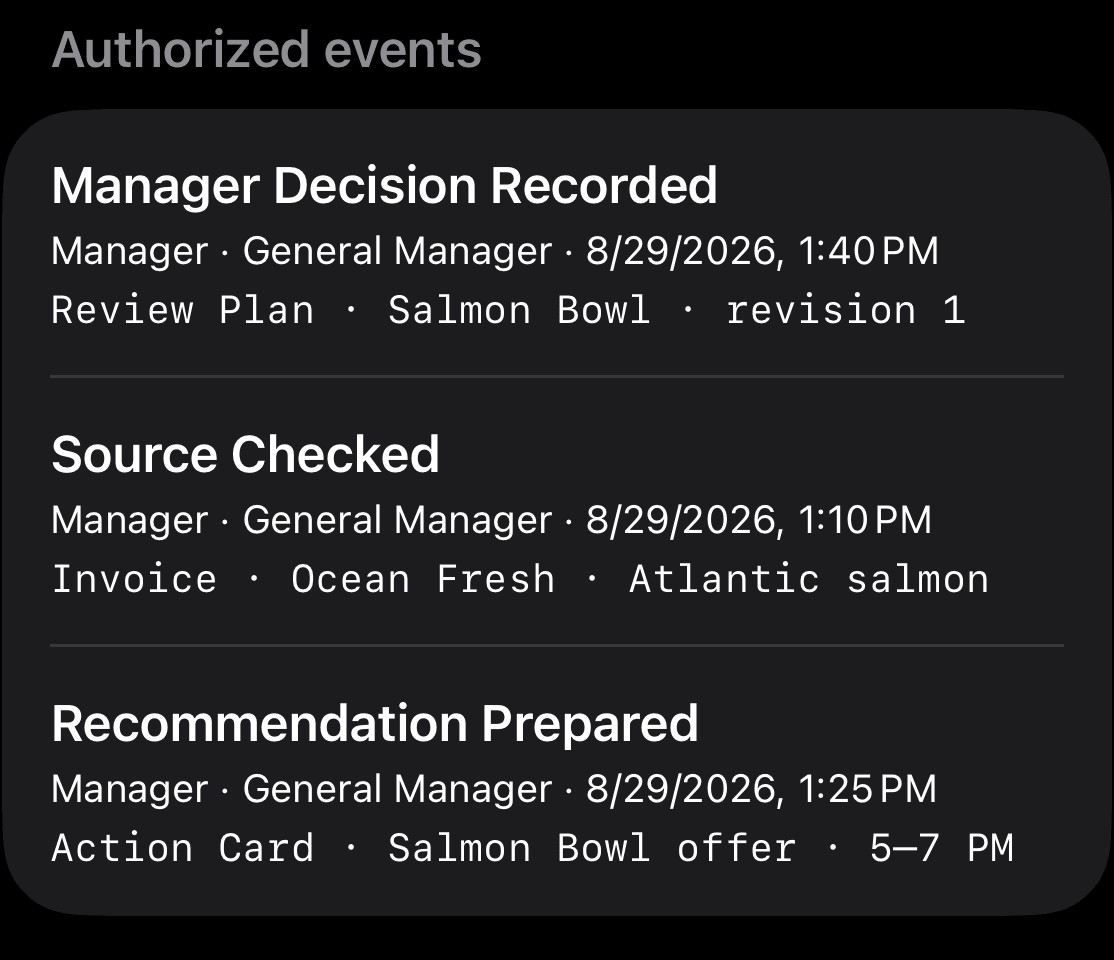
Access boundary
Square may provide optional read-only context when included and authorized for the pilot environment. Dynamic.ly may use approved location and sales context, but it does not change provider menus, prices, inventory, orders, or payments in this product flow.
Evidence vocabulary
The label is the meaning. Colour and a filled or hollow mark support it, and the word is still readable without either.
Hollow mark · the state is incomplete or unconfirmed
The whole boundary, in one line
Walk a real decision backwards through the product: the invoice line, the reviewed cost, the calculation, the estimate, the approval, and what is on file afterwards.
Pilot path ·pilot@dynamicly.app· see how results are measured