See what changed. Decide what to do.

Follow a reviewed cost change from source records to a recommendation and an internal manager decision. Source access and available actions depend on the pilot setup.

See the productDiscuss a pilot

Illustrative product views using example data. Not customer records or results.

Seven steps, with review between them.

  1. 1. Bring records

    Start with the invoices, recipes, and counts available to the restaurant.

  2. 2. Review

    Confirm the item, pack, unit, and source before using the value.

  3. 3. Connect records

    Keep reviewed vendor descriptions tied to one restaurant ingredient.

  4. 4. Calculate

    Apply reviewed quantities and defined restaurant rules.

  5. 5. Prepare a recommendation

    Show the reason, window, floor, cap, and estimates.

  6. 6. Manager decision

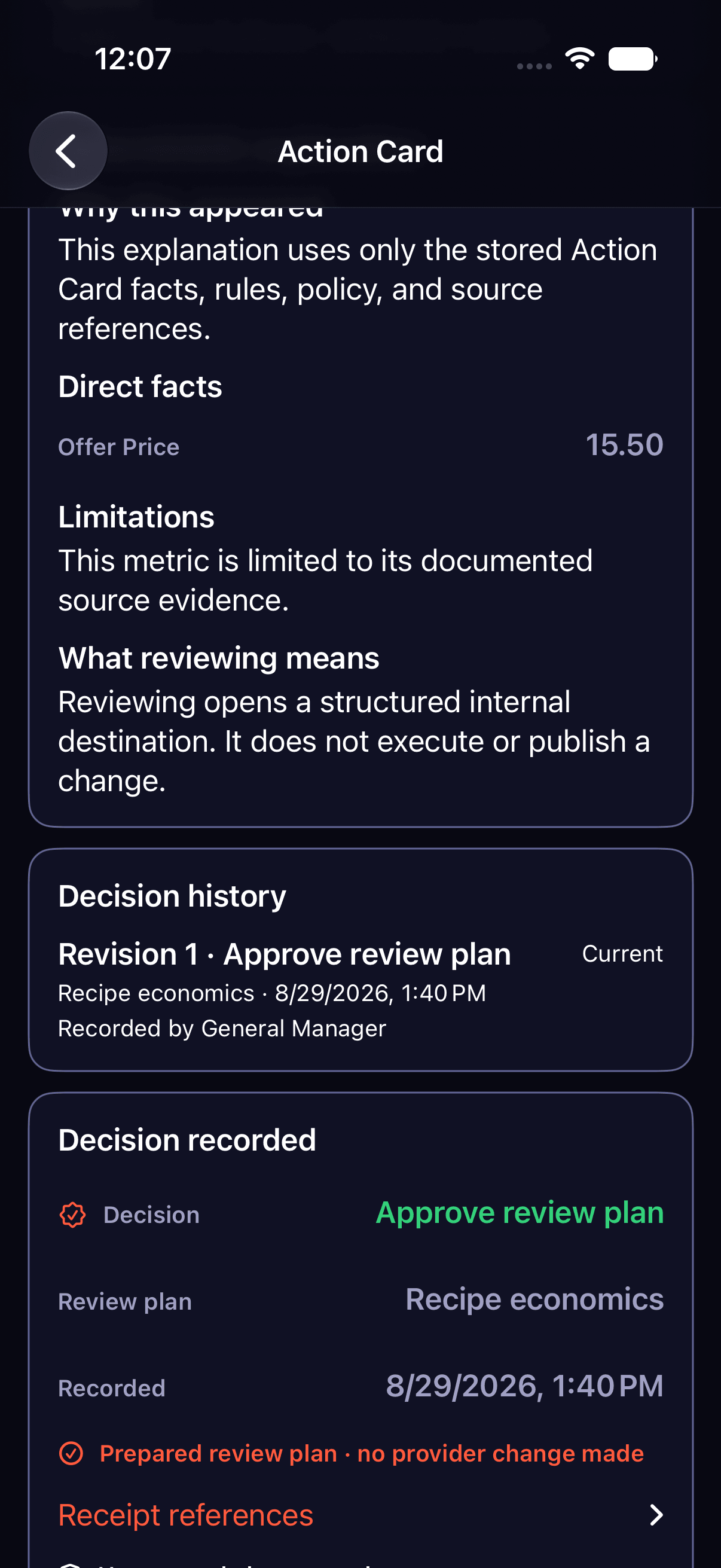
    Record the choice. The restaurant carries out any change separately.

  7. 7. Record and measure

    Keep the history and evaluate later evidence against the baseline.

01 / Bring records

Bring in the records already in use.

Invoices, POS or sales context, recipes, inventory, and counts. Dynamic.ly reads the approved sources; it does not replace them.

Vendor invoices
Provided for review
POS · sales context
Read-only
Recipes
Provided for review
Inventory · counts
Unavailable

Approved sources are read, not rewritten. Missing sources remain visible.
02 / Review · human confirmation

Review what cannot be assumed.

Invoice extraction can propose a vendor, item, pack, and unit. A person confirms the match before it changes restaurant truth.

Source line  →  draft match

“SALM FIL 18LB” · 18.40 USD

Atlantic salmon · 1 lb · needs review

Draft only · nothing is written to the ingredient record until a manager confirms it

Where AI is involved

AI can help read messy invoice text and suggest matches. Reviewed values and restaurant rules drive the calculations. A person confirms the source and makes the decision.

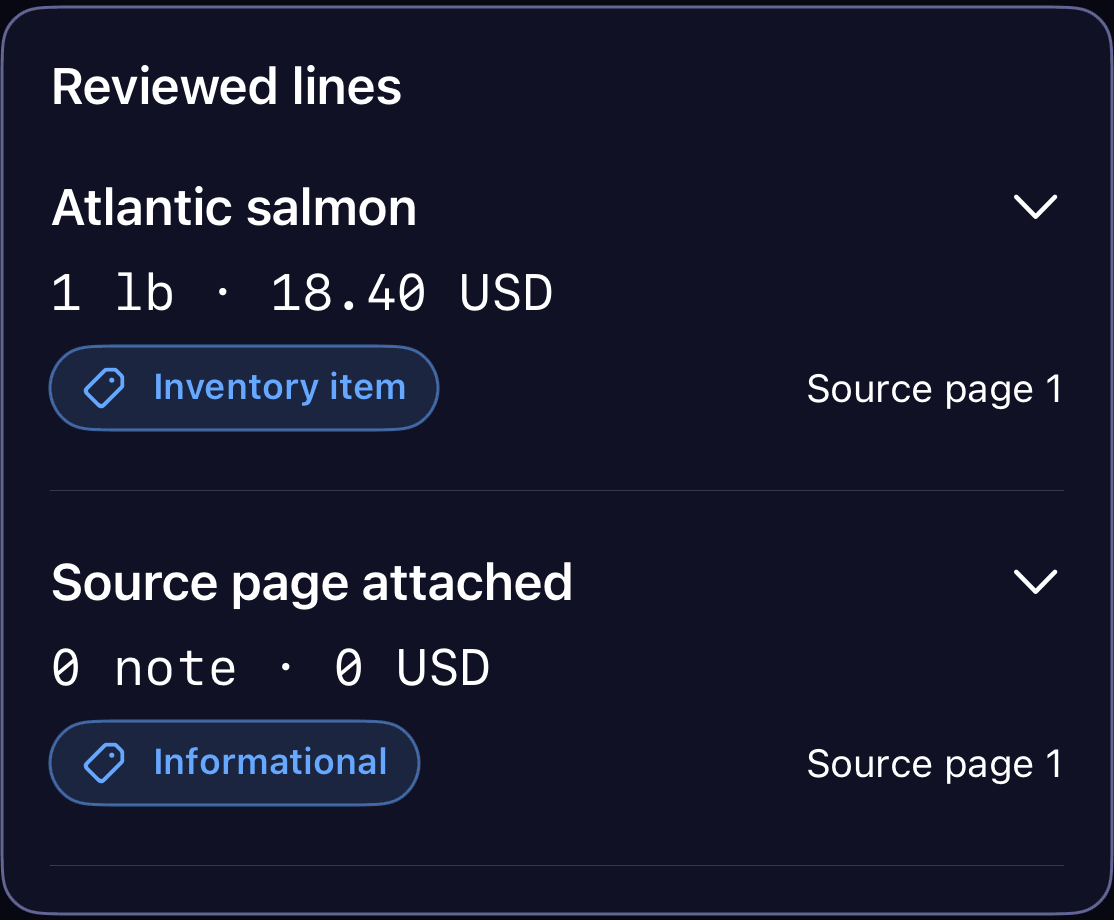
Reviewed salmon line: 1 lb at $18.40, inventory item and source page attached. Invoice approval remains required.

03 / Connect records

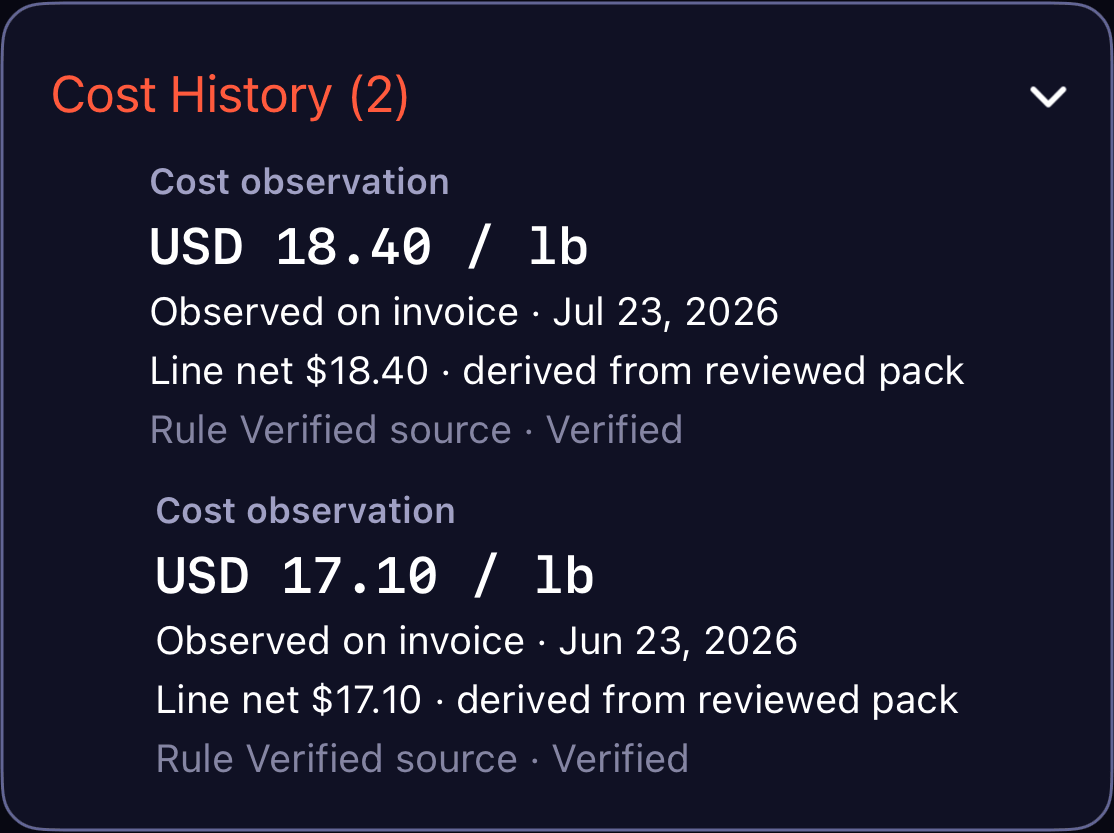
Cost history preserves the previous and current salmon cost and its source.

Connect the records the restaurant has reviewed.

Keep reviewed vendor descriptions, pack sizes, and units tied to one restaurant ingredient. Unresolved matches remain in review.

$17.10$18.40/LB

+7.6%Latest reviewed unit cost
  • SALM FIL 18LBApproved alias
  • FRESH SALMONApproved alias
  • SLMN FIL 10LBNeeds review

Three vendor names, one reviewed ingredient record. A case that does not match cleanly stays in review rather than quietly changing the cost.

04 / Calculate

Calculate what the reviewed change affects.

Reviewed quantities, yields, included costs, and configured rules determine the recipe calculation. Inventory context may add urgency, with source limits kept visible.

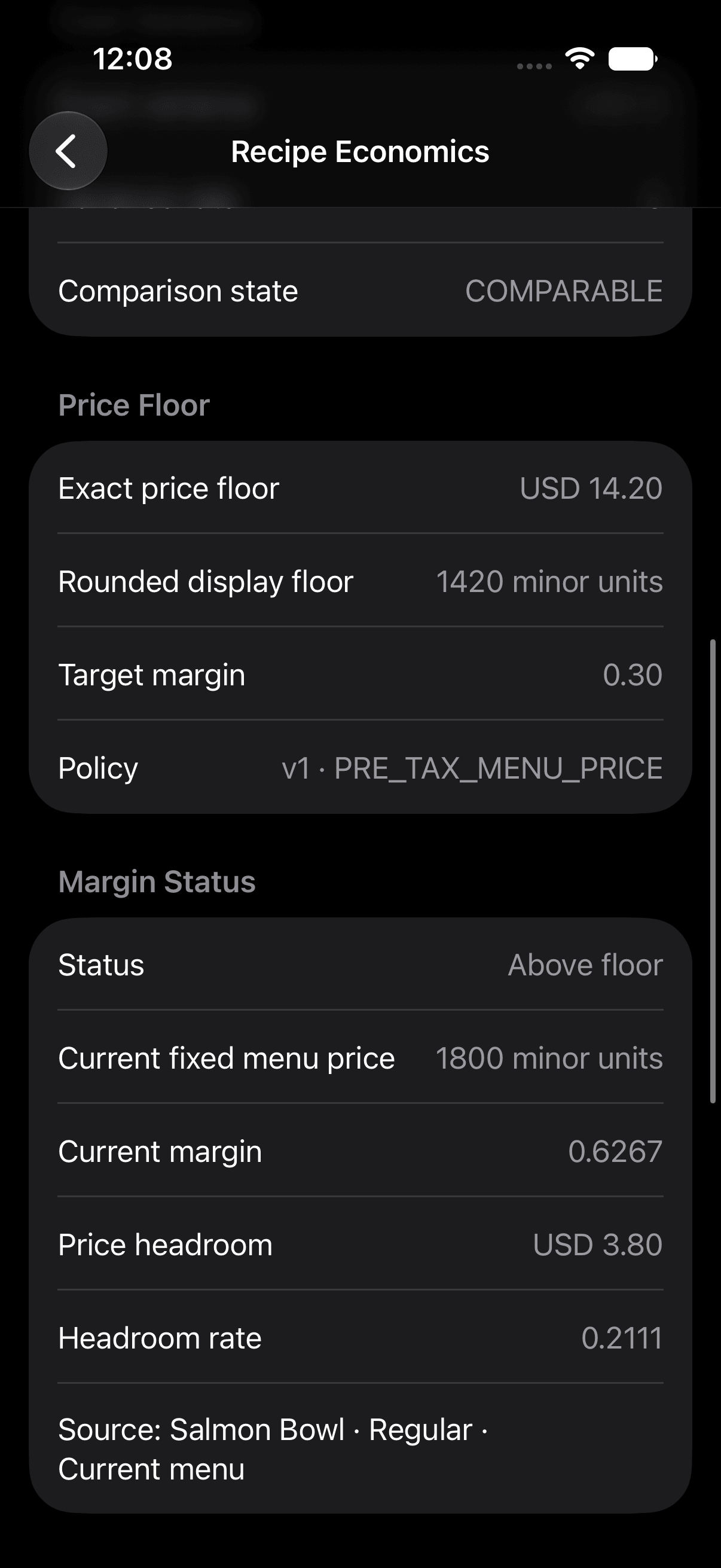
Salmon Bowl economics showing a $14.20 configured internal price floor and a menu price above that floor.
Menu price
$18.00
Configured price floor
$14.20
Example recipe cost
$6.72
Price headroom
$3.80

Both example prices remain above the configured floor. No menu price changes here.

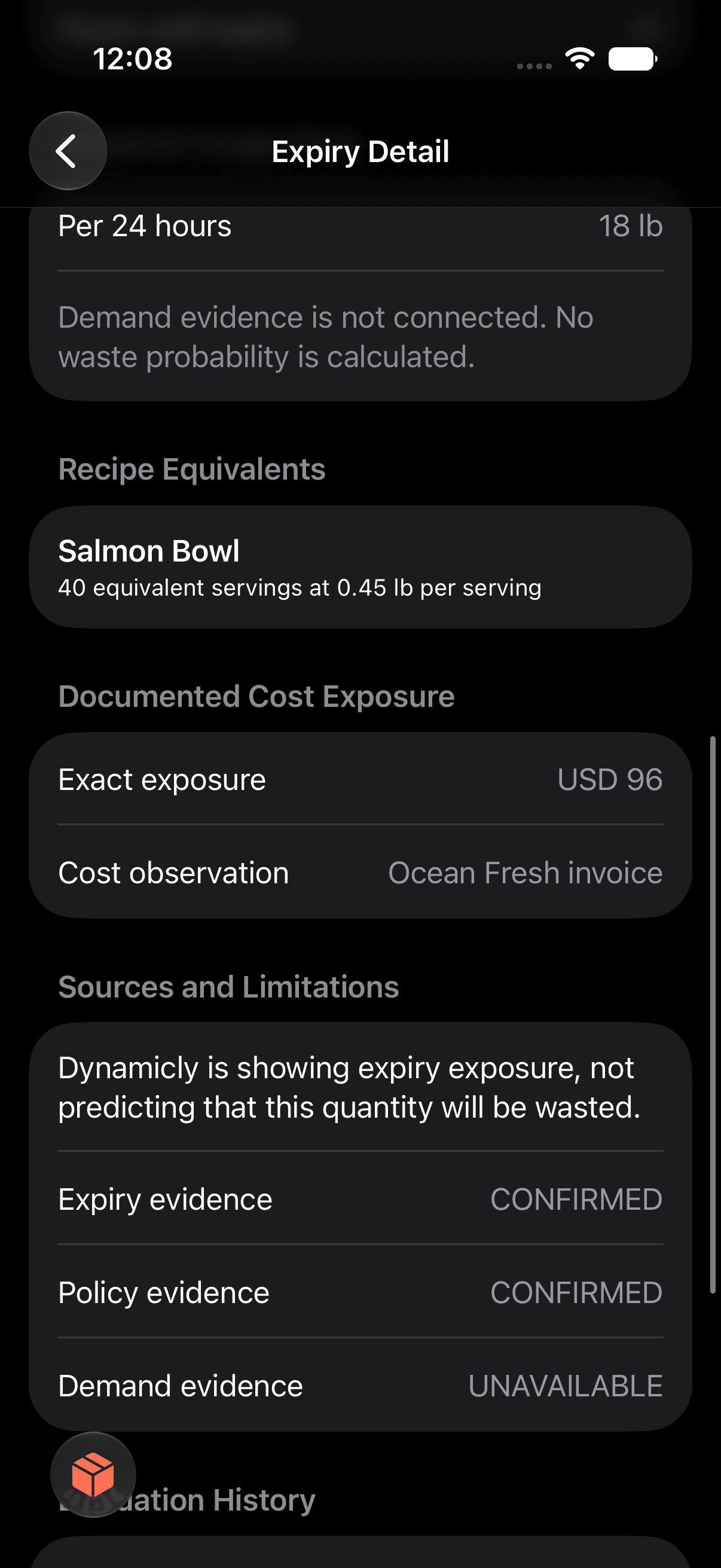
Inventory risk: 18 pounds of salmon and estimated exposure, not a measured loss.

Secondary annotation

An illustrative inventory record shows 18 lb of salmon and an upcoming expiry date. Exposure remains an estimate, subject to count and source review.

05 / Recommend

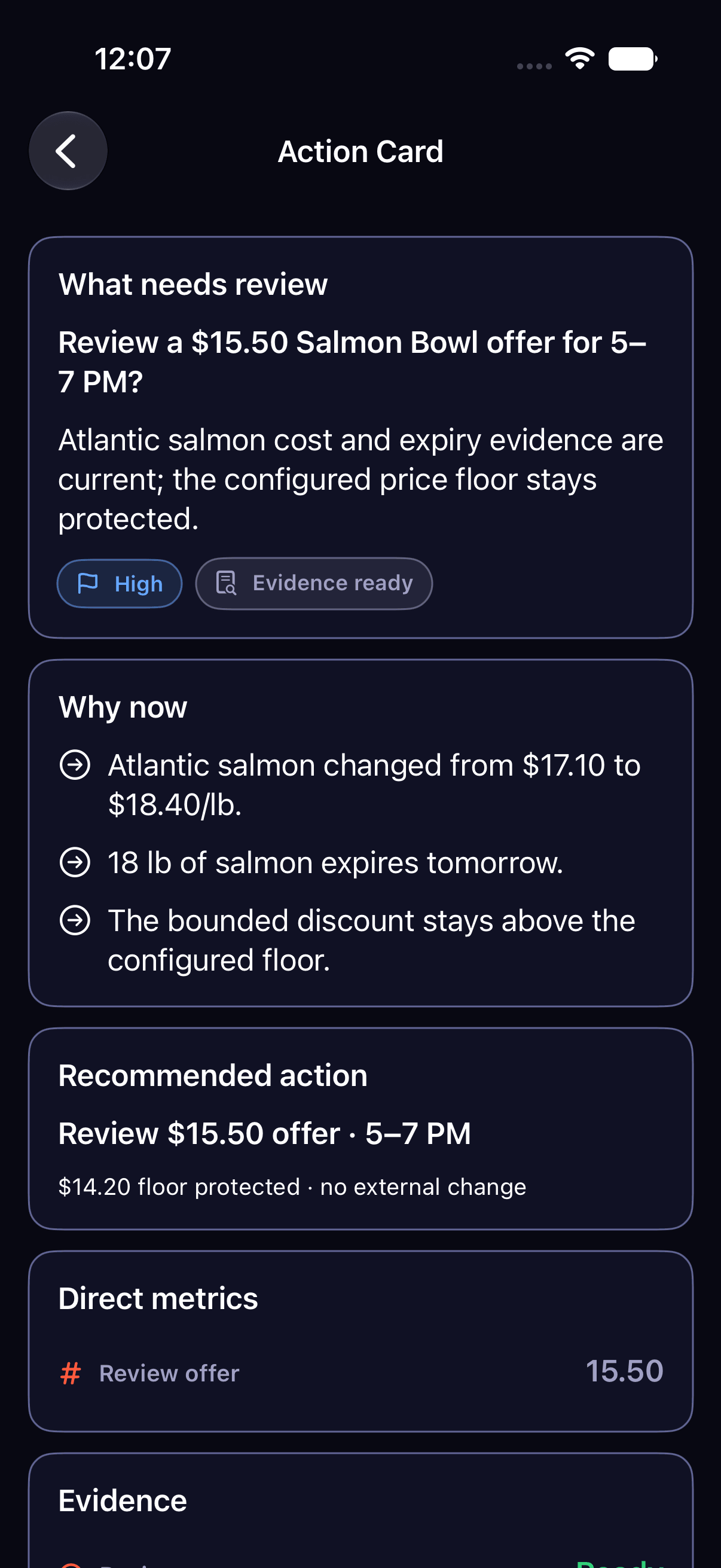
A proposed $15.50 offer for 5–7 PM, with a $14.20 floor and manager review required.

Put the next step in front of a manager.

The recommendation includes why now, its limits, the attached sources, and what remains estimated.

Why now
Cost up · Possible expiry exposure
Suggested
$15.50 · 5–7 PM
Limits
$14.20 floor · cap 40
Attached sources
Invoice · recipe · lot
Still estimated
Impact · not measured

Suggested, never blind · Review does not publish the offer or write to a provider

The manager decides. Execution stays separate.

Step 6 of 7

Approve, edit, reject, or ignore. The review workflow records the manager’s choice and limits. Available actions depend on the approved environment and pilot setup.

A recorded decision does not change a menu, price, inventory record, offer, or provider. The restaurant carries out any operating change through its own authorized process.

07 / Record and measure

Record the decision. Measure later.

The manager’s choice is saved. A projected outcome becomes a result only when the restaurant has evidence after the fact.

Internal decision

Manager decision recorded with revision and timestamp. No external change was made.

History · Sources and manager decision

Decision history links source review, cost change, recipe impact and the manager’s decision.
Actor
General Manager
Recorded
Review plan · revision 1
Projected
Estimated · not measured
External execution
Disabled
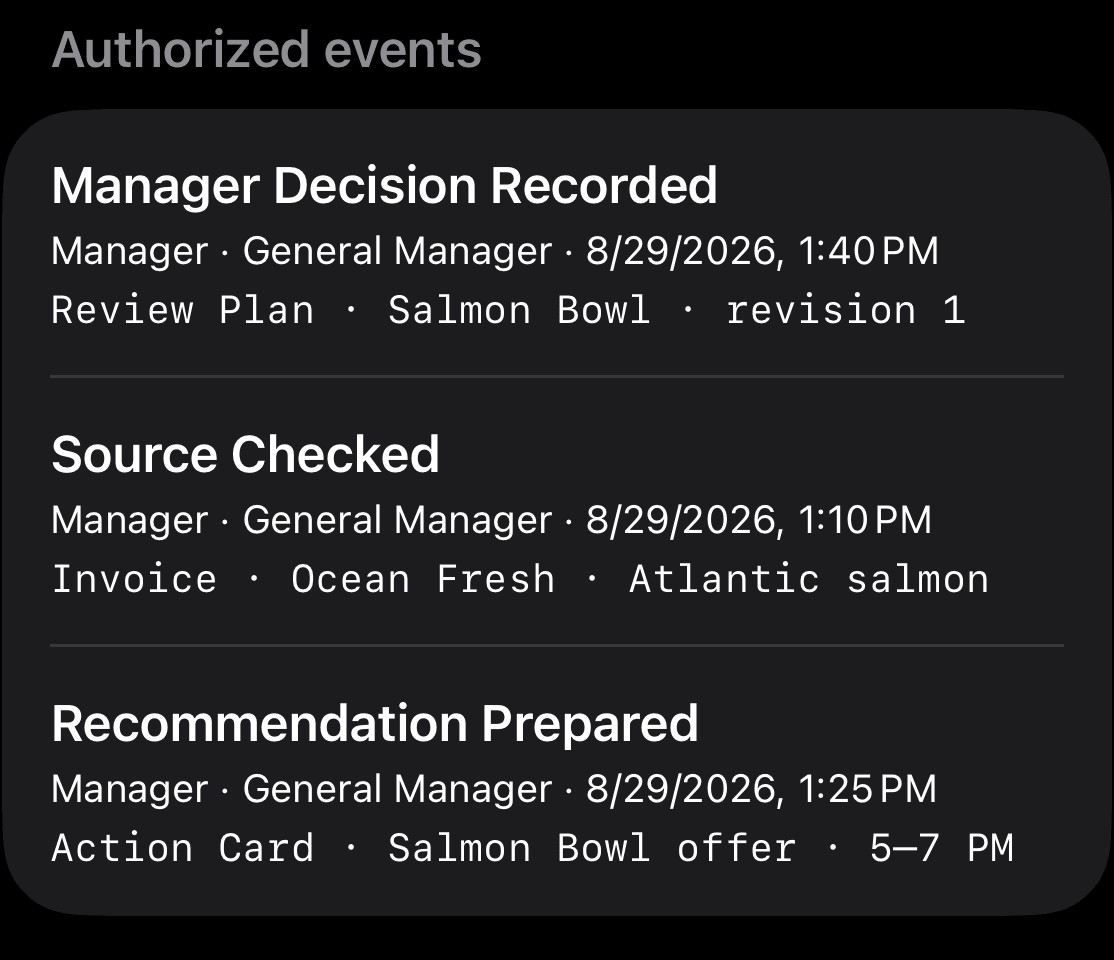
  1. 1:10 PMSource checked — Ocean Fresh invoice, Atlantic salmon.
  2. 1:25 PMRecommendation prepared — Salmon Bowl offer, 5–7 PM.
  3. 1:40 PMManager decision recorded — review plan, revision 1.

What the restaurant later measures is recorded separately. An estimate can guide a decision; it cannot be presented as a result.

Start with records and a person who knows them.

A useful first conversation can begin with one invoice and one dish. A measurable pilot needs a broader baseline, reviewed recipes or counts, agreed limits, and time for manager review.

Dynamic.ly does not replace your point of sale, inventory, purchasing, accounting, reservation, or scheduling system. Source availability is agreed for the pilot setup.

Bring a cost question. Keep the review point visible.

Where a person is required
A person confirms the source and makes the decision. Defined rules calculate supported values; projected effects remain estimates.
External changes stay separate
External execution is disabled. Manager review does not publish a change or write to a provider.