Owner or operator
Which reviewed changes deserve attention, and what evidence would make a pilot useful?
Follow reviewed invoice costs into the recipes and inventory context your manager needs before service. Available sources depend on the pilot setup.
An illustrative service day · No customer result is shown
Illustrative restaurant day
A delivery at the back door, and a decision before the room fills.
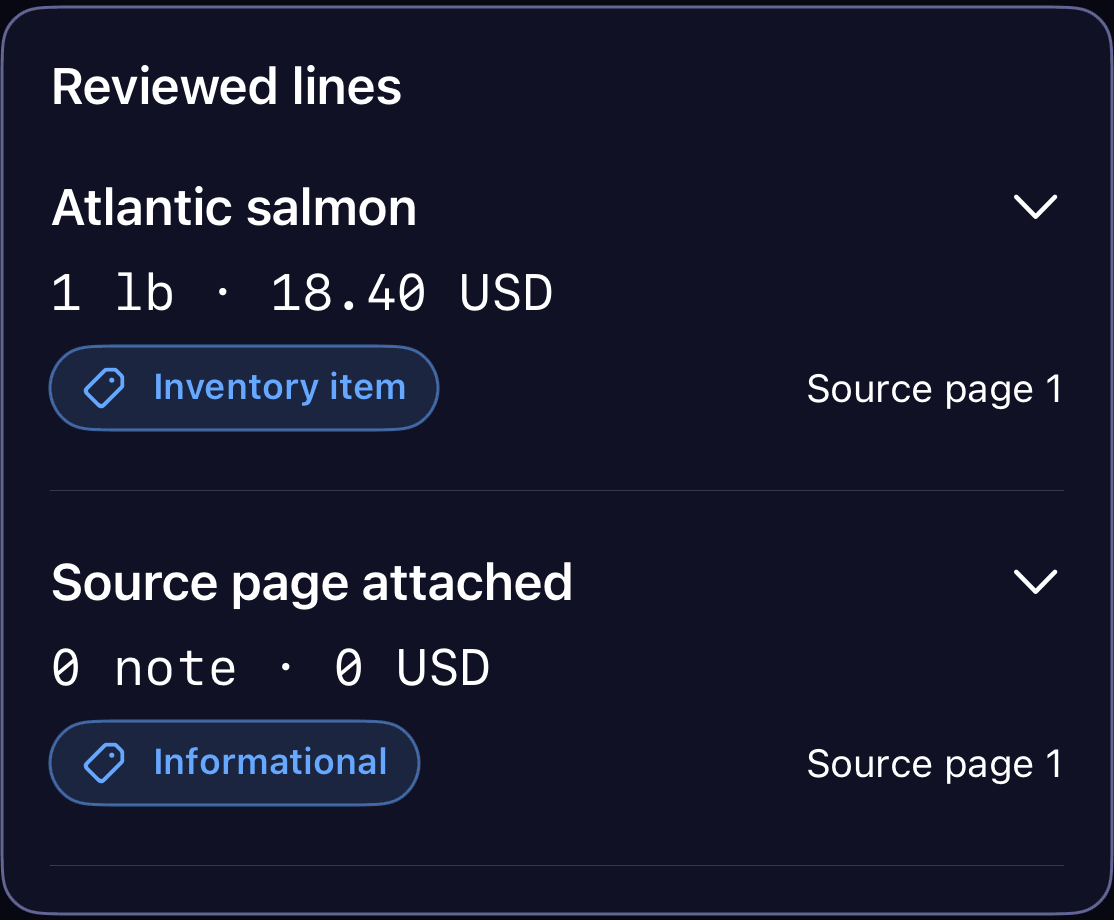
Delivery
The invoice line stays in review with its vendor, pack size, unit, and source. Nothing else changes until the restaurant confirms it.
Prep
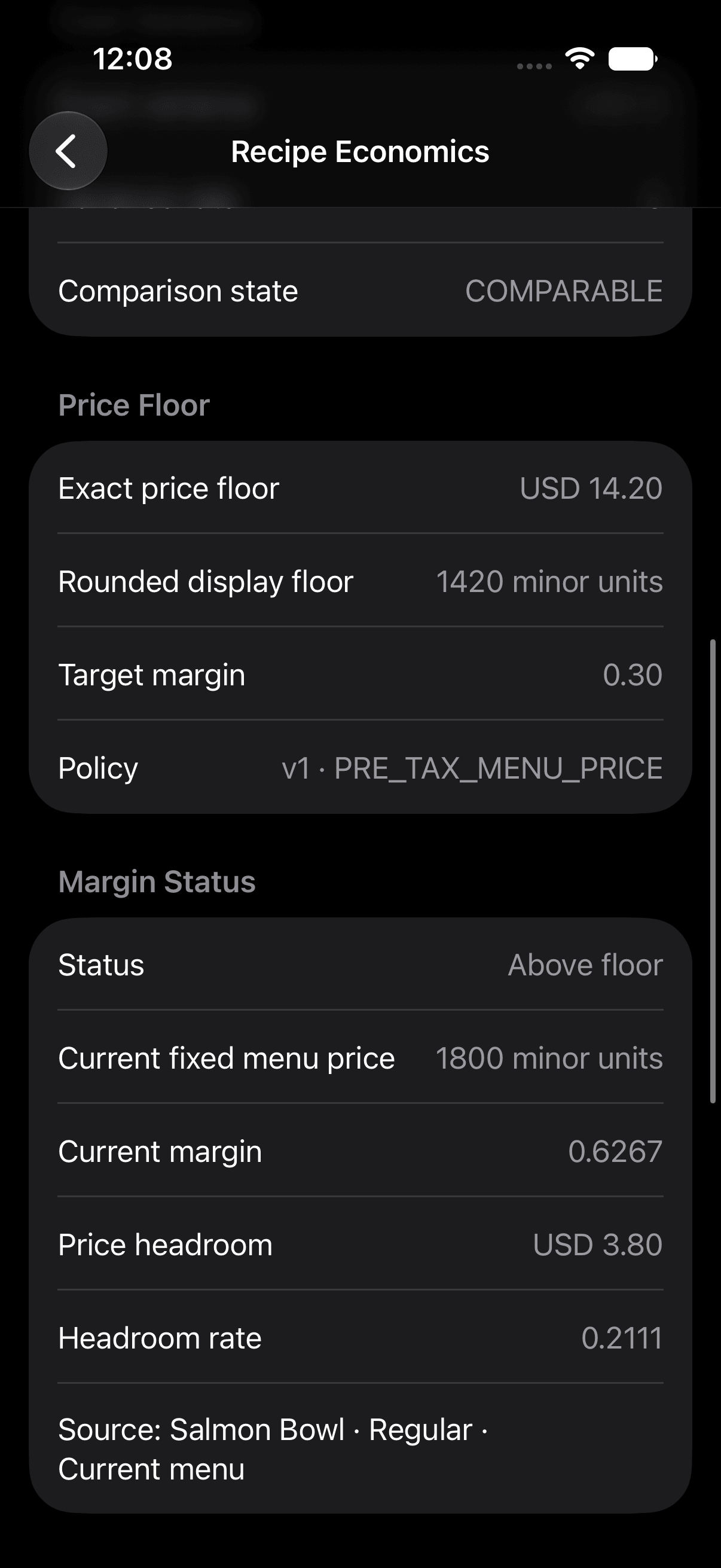
The new cost changes the ingredient history and the recipe economics. Dynamic.ly shows which recipe costs changed and keeps the configured floor visible without changing the menu.
$18.00
Menu price
$14.20
Configured price floor
$3.80
Price headroom
Two dishes use this ingredient · both recosted · no menu price is changed here
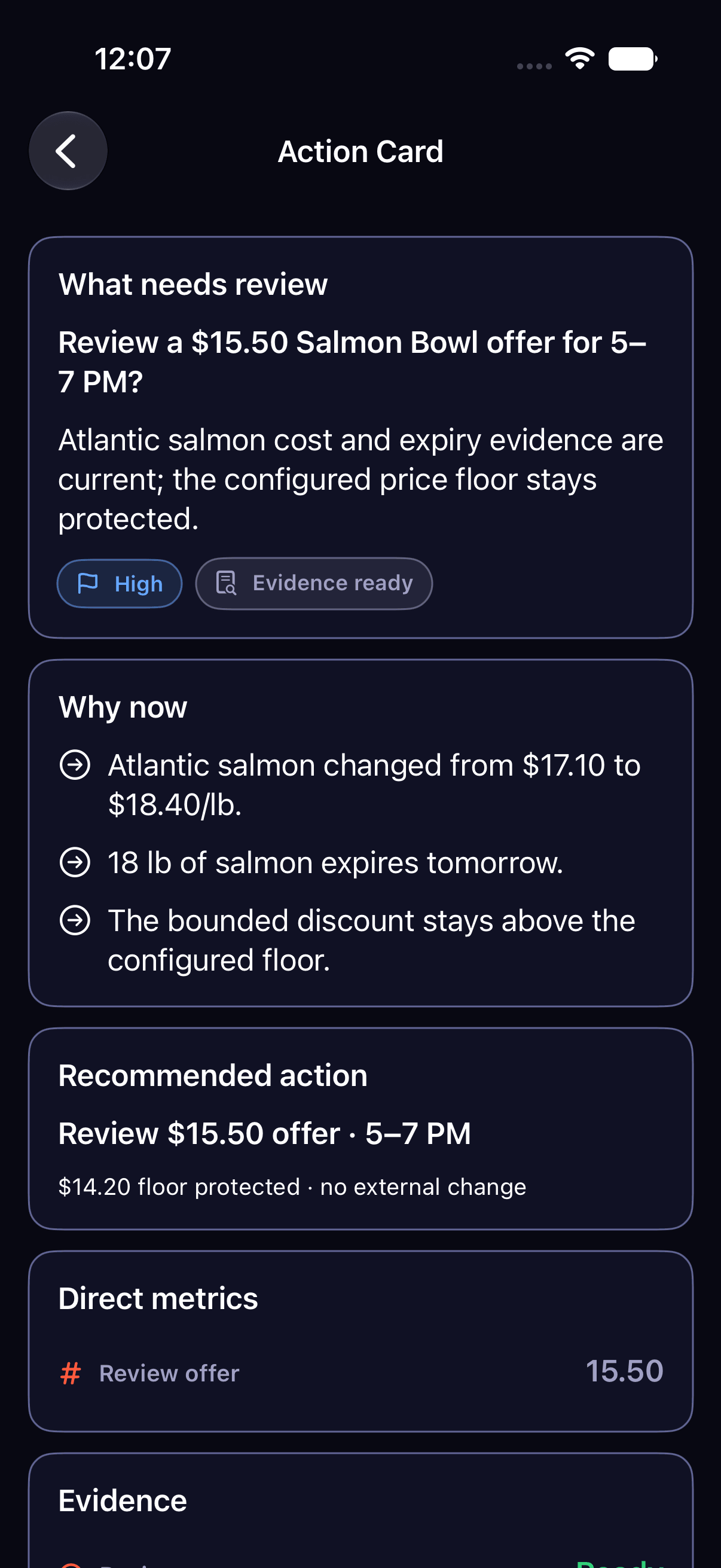
Manager review · the decision
The recommendation arrives with the reason, service window, limits, source, and what remains estimated. The person running the shift decides what happens next.
Pending → recorded
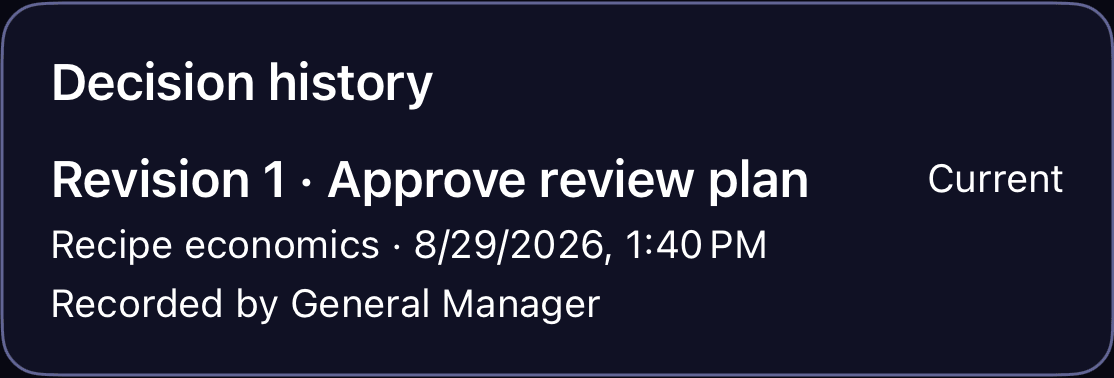
Approve, edit, reject, or ignore. The choice is kept with its limits and sources, and the projected impact stays labelled as an estimate until the restaurant measures it.
Review does not publish the offer or write to a provider
Which reviewed changes deserve attention, and what evidence would make a pilot useful?
What needs a decision before service, within which limits, and who will carry it out?
Which ingredient, pack, yield, or recipe assumption needs review?
Which source, formula, baseline, and exclusions support the number?
Fit
Most of this depends on what the kitchen already writes down.
Start with the records you have. Missing recipes, counts, or source mappings need review before they can support a decision.
That is enough to start the conversation. A pilot baseline itself uses 4–8 weeks of vendor invoices, so the comparison period is the restaurant’s own.
Dynamic.ly recommends. The manager decides.